
In Early Child Care settings, young children who explore by using their hands and putting toys in their mouth, have a higher risk of catching an illness. Children spend a lot of time close to one another and often need help with toileting, diapering, and handwashing. Since many children play in the same space, germs can spread faster if proper health practices are not followed.
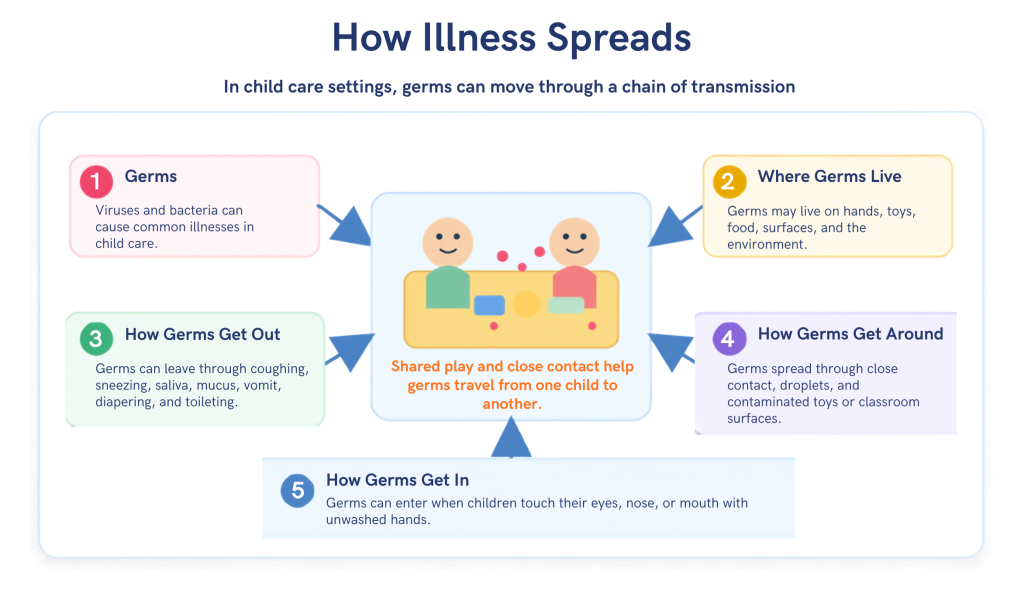
Illnesses can spread in many different ways. Overtime, children can get common illnesses just as much as caregivers do. It is important to keep germs from spreading as much as possible. Some ways that germs spread include poor hand hygiene and touching contaminated toys or surfaces. Germs can spread this way as they involve each child touching the different toys and playing with them, then moving on to play with other toys.
Importance of Illness Prevention
Illness prevention is the key part of providing safety and health care as the caregivers and staff can work together to prevent germs from spreading around in the classroom. Toronto Public Health explains that in child care settings, educators must follow health and safety practices that protect children, staff, and families. A few infection prevention and control practices include hand hygiene, respiratory etiquette, immunization, and disinfecting. These health practices will help decrease infections and outbreaks in childcare centers (City of Toronto, 2014).
Preventing illness helps protect the classroom and the whole community. If educators and staff clean shared materials, support proper handwashing, and follow all guidelines, they help reduce the spread of illness.
Recognizing symptoms early allows educators to act quickly and prevent other children from getting sick (City of Toronto, 2014).