
Safety is a foundational part of good early learning environments because it allows children to explore, learn, and develop while reducing the risk of injury. Children learn best through active play and new experiences, but these activities must take place in environments that are carefully planned and supervised. Planning in safe environments help children build confidence and develop new skills while supporting their overall health and well-being (Pimento & Kernested, 2024, pp. 372-373).
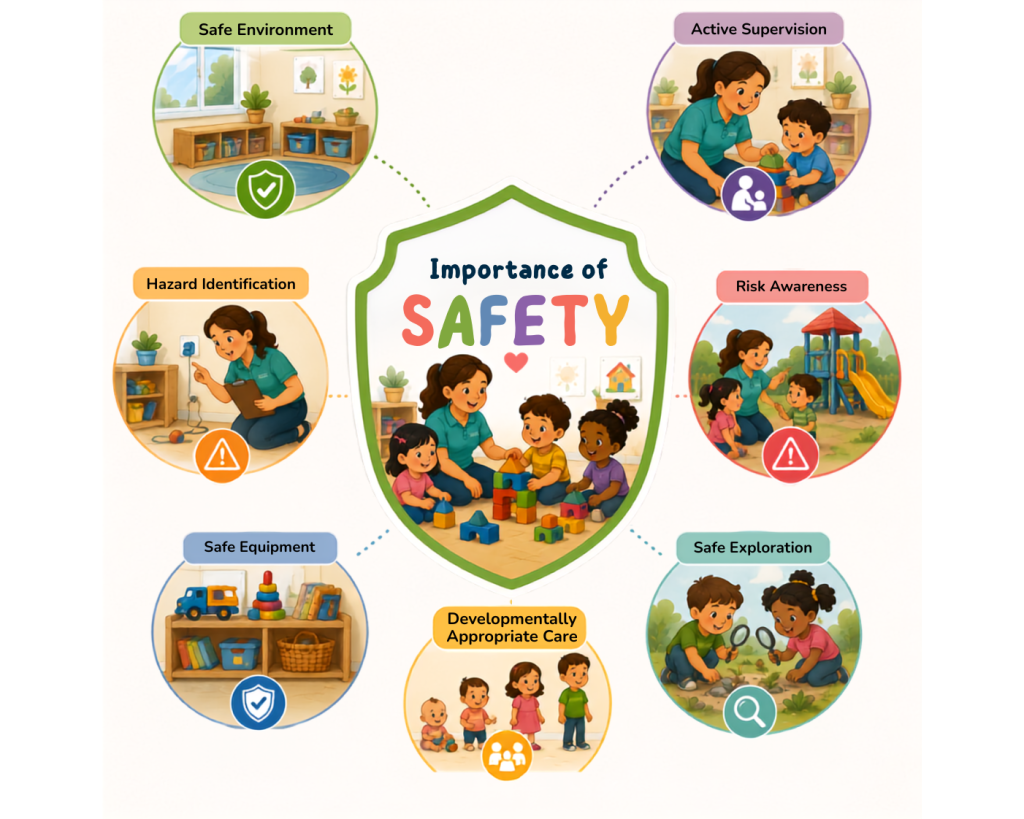
In Early Childcare centers, all educators have an important responsibility to prevent injuries by identifying hazards, providing active supervision, keeping safe equipment, and following approved safety procedures. Injury prevention doesn’t mean that you should remove every challenge from children’s play. It means that educators should give opportunities for safe exploration that supports children’s physical, cognitive, and social development (Pimento & Kernested, 2024, pp. 372-373).
Children of different age groups face different types of safety risks because of the type of stage of development that they are placed in. In order to support children’s learning and focus on reducing the risk of injuries, educators need to understand these differences so they can provide the correct supervision, keep a safe environment, and choose fun activities. (Pimento & Kernested, 2024, pp. 384–387).