
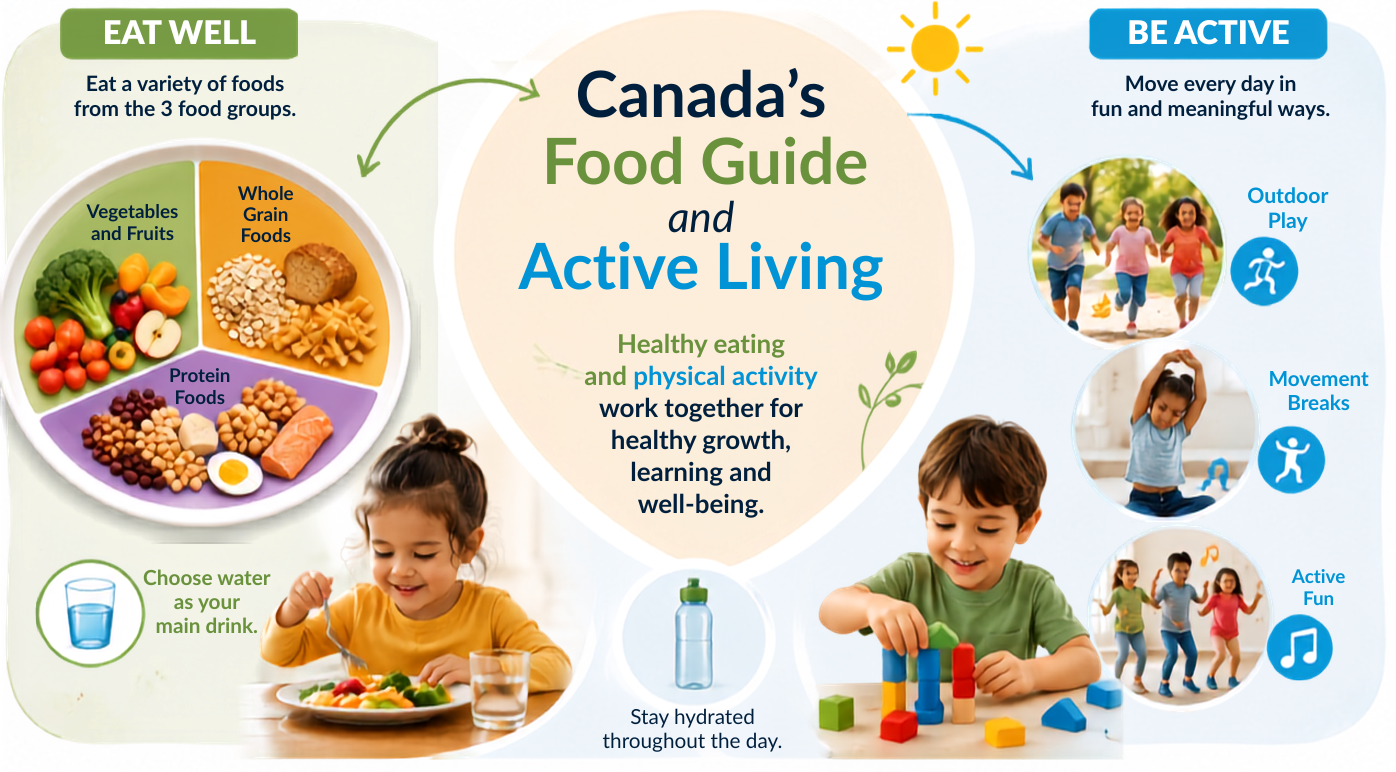
Canada’s Food Guide shows that healthy eating and physical activity work together to help children grow, learn, feel happy, and stay healthy (Health Canada, 2026).
The guide recommends serving a balance of vegetables and fruits, whole grain foods, and protein foods (Health Canada, 2025). Eating balanced meals provides young children with steady, long-lasting energy. This helps them stay active, participate in physical activities, and engage in daily learning without becoming tired too quickly. The guide also recommends choosing water as the main drink to keep children hydrated during active play instead of offering sugary drinks (Health Canada, 2026).
Throughout the daily child care schedule, educators can easily connect healthy eating and movement by:
Keeping Balanced Mealtimes
Serving healthy meals and snacks to young children every 2–3 hours helps meet their nutritional needs and keeps their energy levels steady. Family-style dining also encourages children to listen to their hunger and fullness cues and choose how much food they need based on their appetite and activity levels (Health Canada, 2026).
Movement Breaks
To reduce long periods of sitting, such as during circle time, educators can include short and enjoyable movement activities throughout the day. These may include transition games, stretching, dancing, or outdoor play. When children are well-fed and hydrated, they have the energy and focus to participate actively in these routines (Health Canada, 2026).
Role of the Educator and Environmental Support
The role of an Early Childhood Educator (ECE) is to create a supportive environment by connecting healthy eating with active play and setting a positive example. When educators sit with children during family-style meals, eat the same healthy foods, and drink water alongside them, they help make healthy habits feel natural (Health Canada, 2026). Educators also show children that nutritious food provides the energy needed to run, play, and explore by actively participating in movement breaks.
When educators consistently encourage healthy eating and active play, children begin to develop these habits as part of their daily routine. This holistic approach helps young children understand that nutritious food and regular physical activity work together to support their health, learning, and overall well-being (Health Canada, 2026).